A book by Richard Brock, founder of OnBoard Legal
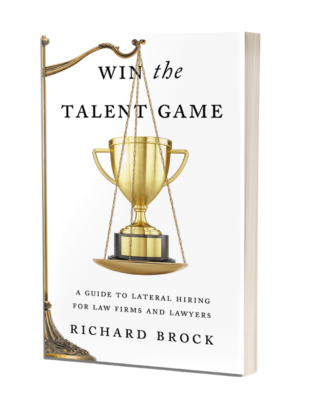
Win the Talent Game: A Guide to Lateral Hiring for Law Firms and Lawyers
Most firms treat recruiting like a chore: a seat to fill, a hand-off, a line item. Win the Talent Game makes the opposite argument, that lateral hiring is the fastest, most reliable way your firm grows revenue and profit.
Richard Brock practiced law before moving into legal recruiting more than twenty years ago, and he founded OnBoard Legal. He wrote the book after watching firm after firm lose laterals they should have landed, for reasons that were entirely fixable.
Member of the National Association of Legal Search Consultants.
Recruiting is offense, not a chore
The book is built on one premise: in business, you are either growing or dying. Organic growth is slow, too slow when you have clients with urgent matters and real opportunities sitting in front of you right now.
The five moves a firm can make
A single lateral partner can bring revenue with them on day one. That makes recruiting your most direct lever for growth, which means it deserves to be run like a strategy, not delegated like an errand.
His frame is blunt: a lateral hire is not filling a seat. It is a corporate acquisition. You evaluate it the way you would weigh buying a business: is it accretive, is it strategic, and what is the return? Read it that way, and the whole conversation about cost changes. Recruiting stops looking like an expense and starts looking like the growth capital it actually is.

Who wrote it
Richard Brock came to recruiting from the practice of law, not from a career in sales. He is a lawyer by training, licensed to this day, and he has spent more than twenty years placing lawyers and advising firms on how they actually grow.
Along the way he built OnBoard Legal, a recruiting firm with nationwide reach, run on retainer rather than contingency. It is selective about the searches it takes on, and every candidate meets the same standard before a name goes anywhere.
Win the Talent Game is the distillation of what he has seen work over those years and the avoidable mistakes he has watched cost firms the candidates they wanted most.
What is inside Win the Talent Game
Frameworks you can use in your next partner conversation, not theory.
The signature framework
The Three Cs: cash, culture, camaraderie
What actually lands a lateral. Cash comes first. A lawyer rarely moves unless the financial opportunity is clearly better, and much of that comes down to how a firm credits originations, not just the headline number.
Culture is the second factor. Laterals have walked away from more money over culture alone. It shows in the compensation system, the work ethic, and how partners treat each other and the staff.
Camaraderie, real professional friendship, is what closes the gap. Cash opens the conversation. Culture and camaraderie are what get the deal signed.
Why lawyers actually move
Compensation systems, transparency, rate flexibility, client conflicts, and a platform that lets a book keep growing. Money matters, but it is rarely the whole story.
The growth taxonomy
Name the strategic reason and you sharpen the play: pure growth, geographic expansion, and practice area expertise.
Group hires bring the clients too
A group brings more revenue and is far more likely to bring the clients with it, because few people are left behind to fight to keep the business.
Your firm is selling, too
Firms forget they are the seller, move too slowly, and show up with no compelling reason for the lawyer to leave. Time kills deals.
Be a place talent wants
The firms that win laterals are worth joining. Leadership and culture do the recruiting long before you ever make the first call.
An investment, not an expense
Treat recruiting spend like the growth capital it is, and the math changes. The right hire pays for the search many times over.
In business, you are either growing or dying, and lateral hiring is how firms choose growth.
The central argument of Win the Talent Game
Who should read it
Managing partners & firm leadership
If you are weighing whether recruiting belongs in your growth strategy, or whether to engage a recruiter on a retained basis, this gives you the framework to decide and the language to lead the conversation at the partner table.
From the book, for firm leadership: eighteen ways a lateral hire goes wrong and what a lateral partner is actually worth.
Hiring partners & recruiting committees
A clear way to evaluate laterals like the acquisitions they are: accretive or not, strategic or not, and worth the speed it takes to close before someone else does.
From the book, for the committee: what you may and may not ask in lateral diligence.
Lawyers considering a move
What actually transfers when you leave, why firms compete for you, and how to read the Three Cs before you sign, so your next firm is the right fit, not just the next call.
Three guides from the book, for lawyers: the minimum book myth, don’t move alone, and the day you resign.
Go deeper
Grab the book in print or digital through the official Win the Talent Game book page, or read more about how OnBoard approaches lateral recruiting, merger services, and in-house placements. When you are ready to put it to work, you can talk to our team about a retained search.
Read the book. Then let us talk about your next hire.
The book gives you the playbook. Putting it to work is where we come in: a retained, selective search built around what your firm is actually trying to become.